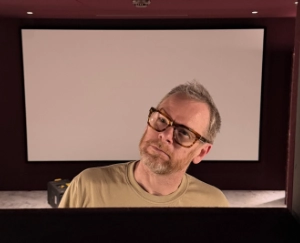
This is what exceptional feels like
There’s a point on the performance curve where ‘impressive’ stops being the right word. You stop noticing the system, or the room. You’re just there, in the film. The outside world has ceased to exist for a while.
It doesn’t happen by accident. It’s the result of getting everything right - room, acoustics, electronics, calibration.
These are the projects where the resource is there to optimise every element - a wonderful thing. We still have constraints, as we're building in real houses, but there's much less left on the table.
Depending on the project, the team may include specialist acousticians, dedicated fit-out companies, and calibration engineers - people who do nothing else.
Here’s what goes into them.
The room itself
Getting the space right is a real balancing act. The room needs to feel comfortable and inviting, but we have a lot to fit in.
At this level, the walls aren’t just walls. A bespoke acoustic wall system - built by dedicated acousticians working to a precise brief - creates an inner room where speakers and acoustic treatment are integrated behind fabric. The fabric wall is the acoustic treatment, not a layer stretched over it. Everything works together as one purpose-designed system, and the result is a predictable, controlled sound response that a typical treated room can’t match.
This also means more space is needed. Larger subwoofers, more of them, and meaningful clearance between the listening area and the side and back walls - wider is better, for everyone in the room.
The projector lives in its own room, with port glass between it and the cinema. Fan noise is kept out. Air conditioning and ventilation are engineered to deliver cool, fresh air, silently. Every noise source is considered.
Sound isolation and noise floor
The single most effective way to improve dynamic range is to make the room quieter. That’s true at every performance level, but it matters more as the spec rises.
Sound isolation is an engineering question, which needs clear targets. How far is the cinema from the bedrooms? How old are your children? How loud do you want to listen at 2am? How many subwoofers, at what power? Do you live near a road, railway, or flight path?
The answers determine how much isolation you actually need - broadly, more isolation takes up more space in your walls, floor, and ceiling.
Dynamic range - the difference between a whisper and an explosion - is what makes a film feel real. A quieter room lets the quiet moments breathe, which makes the loud ones hit you with physical weight. When it’s right, you’ll feel it.
Bass
Getting the bass right in a domestic room is a hard engineering problem, and the most critical for emotional impact.
In larger spaces like concert halls or commercial cinemas, the bass notes play quite happily. In our domestic rooms, up to around 10m long, certain notes fold back on themselves and create standing waves - too loud in some areas, missing entirely in others.

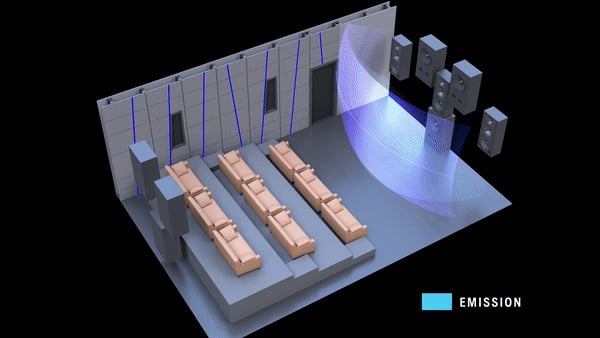

The solution involves multiple subwoofer positions worked out carefully, more cone area, serious power, and top-end processing. WaveForming - a wall of subwoofers front and back delivering remarkably even bass at every seat - is the current state of the art. At the highest performance levels, infrasonic subwoofers with 24”+ drivers extend the response below 20Hz, into territory you feel rather than hear.
Deep, fast, even bass underpins everything. It’s the foundation the rest of the experience is built on.
Processing
I’m deliberately not talking about amplifiers or speakers here - there are many excellent ways to approach both, and the best answer depends on your room, your tastes, and the engineering specifics.
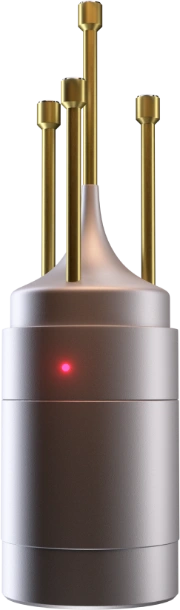
Processing is a different matter. Trinnov Audio remains at the top - their processors have around ten times the timing accuracy of a standard AV receiver, which affects the perceived sense of reality and the control of low-frequency information. It’s not just how much bass, it’s the precise timing of it that matters.
Storm Audio are a serious and worthy contender, and the new Audio Control range looks very promising.
The best processors make the difference between looking at someone else’s holiday pictures, and being there watching the sunset.


Picture
Big, bright, vivid, accurate, with immediate response and clean motion.
At this level, the projector is likely to be a 3-chip DLP laser device, chosen for sustained brightness, motion handling, and colour accuracy over its lifetime. The two leading names here are Barco Residential - purpose-built for private cinema - and Christie, both with DCI capable options..
Screen masking lets the image shape match the content - wider for Cinemascope films, taller for IMAX, standard 16:9 for sport and TV. The best video processors from Lumagen and MadVR go further still, adding aspect scaling and enhanced tone mapping to make everything look exactly as it should, on whatever screen shape you want.
For rooms used in higher ambient light, modular display walls - Samsung The Wall, Sony Crystal LED, and a host of new options - the latest Barco looked particularly good at the last ISE Show.
Source material
When the system is this revealing, source quality matters more than it would elsewhere.
As a minimum, a high-quality UHD Blu-ray player. Better still:
Kaleidescape
The convenience of streaming with the quality of physical media, and often better - on average, a 4K Kaleidescape download has 30% more data than you'll get on a UHD disc, and many times more than streaming services.



Bel-Air Cinema
Using the DCI (Digital Cinema Initiatives) connection standard, Bel-Air delivers films at the exact quality of the mastering studio. As close to the filmmaker’s intention as it’s possible to get at home.

For the right project, I can show you DCI in action. It’s worth understanding why it matters: even Kaleidescape delivers compressed content. DCI doesn’t - it’s the master, untouched, with all the data for picture and sound. The difference is real, and significant.
What does it cost?
A well-specified room of sensible size starts at around £200k. Beyond that, the variables are the room itself, the number of seats, the acoustic wall specification, and how far you want to take the electronics. The clearer your brief, the more precise the figure.
At the highest levels - larger rooms, full bespoke acoustic construction, reference-level electronics throughout - budgets move into significant six figures and beyond. These are genuinely extraordinary rooms, and the investment reflects that.
There are a small number of facilities I can take you to - see, hear and feel what this level of performance is like. Get in touch to talk about it.

WRITTEN BY
Owen Maddock
Owner & designer, Cinemaworks
I've spent twenty years looking for ways to make films feel more real in people's homes.
CEDIA® Member of Excellence, award-winning designer, podcast host, and the one you'll actually work with.