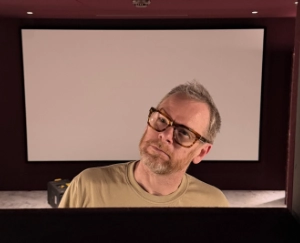
Doesn't everyone win awards these days?
Absolutely.
A few years back I guested on a podcast, to talk about industry association CEDIA.
During that I coined the phrase 'chip shop awards'* - and you do see those - industry and business awards that are paid for, where all shall have prizes. Or, they're a reward for advertising spend, or go to cronies of the issuing body.
*at least, I think it was original.
It's reasonable to be suspicious, or assume they're all the same.
In contrast, the CEDIA Smart Home Awards are impartial, rigorous and engineering-led.
You would say that, you've just won.
Well, yes, yes I have.
I've wanted to win 'Best Home Cinema' ever since I found out it was a thing, so right now I'm pretty happy.
 (opens in a new tab)
You might not know that I've served on the project judging panel for six years running. So I have a bit of inside intel.
Impartial and anonymised
I judged projects from EMEA region just once, in 2019.
Even then, entries were anonymised - company logos and people's names have to be taken out, and that's checked before the panel sees them. That means we only had the evidence - photos, measurements and documentation - so it was all done fairly.
In 2020, things changed to make it even fairer. CEDIA is organised as three global regions - EMEA (Europe, Middle East and Africa), Asia-Pacific, and Americas. These days, judges look at a different region each year, and entries are still anonymised - we have no idea who these companies are.
Accusations of cronyism - which some people do make - don't stack up to reality.
My Dad says they're just jealous.
Evidence of performance
At core, CEDIA Smart Home Awards are about excellent design and implementation of a home technology project.
My main task these days is designing entertainment spaces - home cinemas, and media rooms. Here, the crucial documents are video and audio reports.
An entry that scores well has to provide evidence, not of predicted performance, but real, measured, in-room results - we're looking for colour accuracy, good screen brightness, even bass, and a sound decay time in the 'goldilocks' range - not too dead, or too lively, but just right.
Far too often, I see the predictions from one or other automatic EQ system, proudly labelled as the 'calibration report'. Auto systems are quite good, and it's better than a completely uncalibrated system, but it's nowhere near enough for a winning entry.
With my judge's hat on, I score those entries poorly - and may vote to take them off the shortlist.
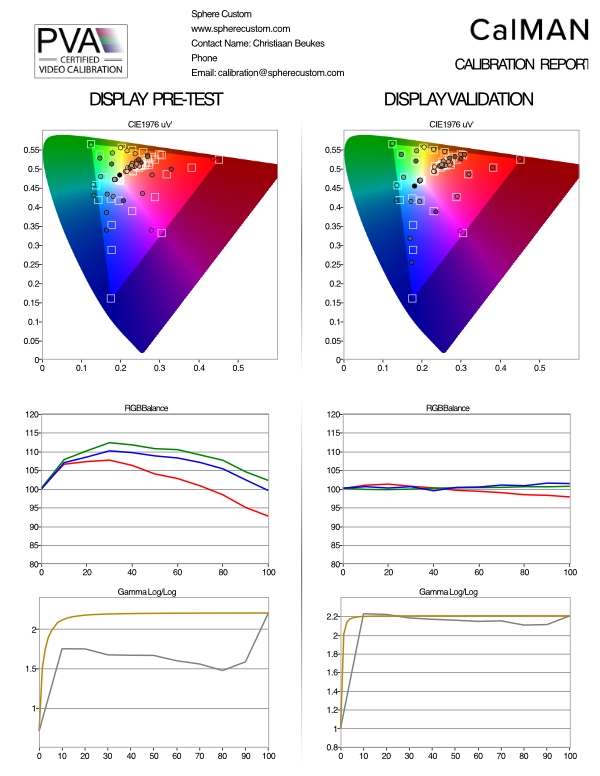
Video calibration - big thanks to Christiaan of Sphere Custom & Cinema Lusso for ours
Another part of the evidence we want, is that for a few years now, a clear photo of the back of the system rack has been mandatory, showing all cables and connectors.
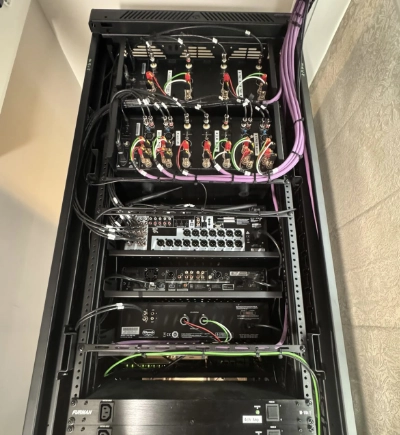
Back of the rack from Beside the Seaside. Won't win Best Dressed Rack, but acceptable.
Racks must - as a minimum - be neat, tidy, and serviceable, with all cables labelled at both ends.
A bird's-nest of cables won't make it through to the next stage of judging, and neither will no picture. Excuses don't count at this level.
Engineered for excellence
I'm a big fan of the CEDIA way of doing things - industry standards and lots of education, to create repeatable results and engineered experiences.
From my own journey designing these systems, I know beyond doubt that a well-engineered room gives you a better, more impactful, and deeper emotional experience than the 'random', 'hit and hope' or 'magical thinking' approach. That second type is sadly quite common, although things are improving.
Doing the engineering lets us identify and overcome various problems - which would otherwise spoil your experience.

CEDIA recommended practices such as RP-22 - and future RPs currently in development - give clear guidance and signposting to those looking to improve their project quality, and their awards entries.
Great documents
I often encourage my industry friends, especially those with a good portfolio, to also enter the awards. I'm really happy with my two wins so far, and I never mind losing to great projects (like this Best Integrator Showroom winner from 2023 - I was delighted to even make Finalist against such an amazing setup).
I wish more of my peers could enjoy the same recognition. The most common objection is 'but it takes too long to do the documentation, even though our projects are really good.'
And that makes me sad.
For the first win in 2018, jointly with my friend Matt, we winged it a bit - following standards, but finished some documentation after the job. This time round, I did it all in advance - standards are now more complex, and I needed it to work really well in the plans, ahead of installation.
I also had to give the builders really precise guidance, so my design drawings had to be good, clear, and easy to follow.
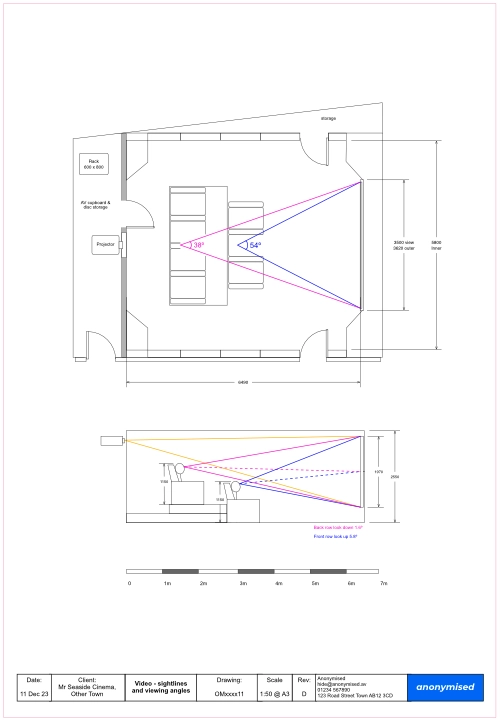
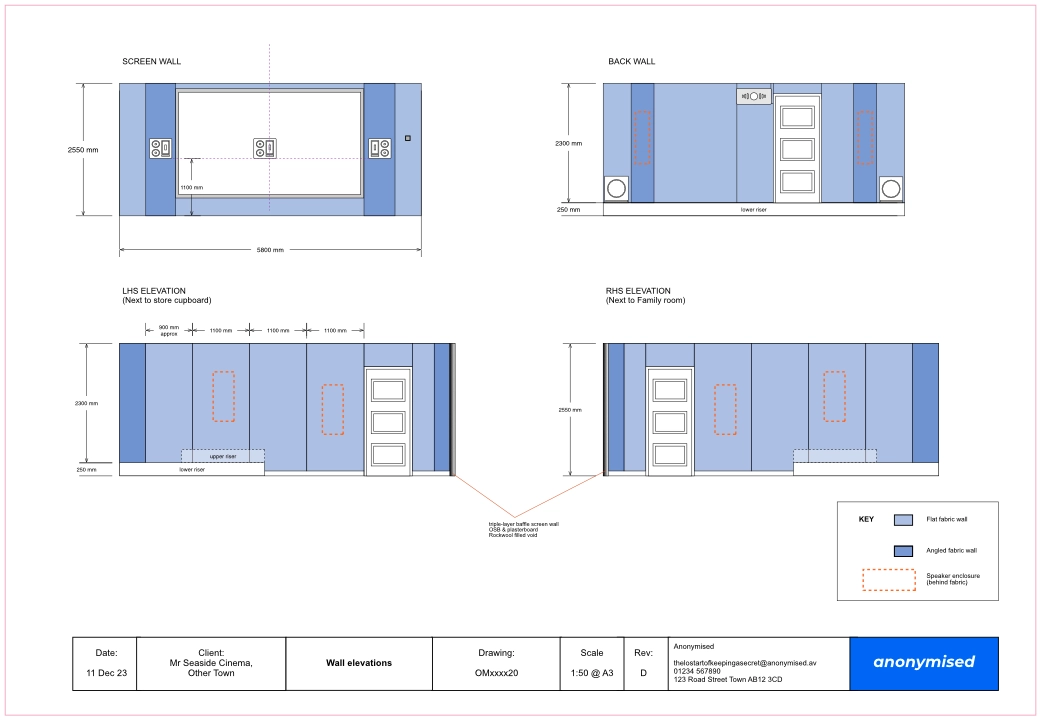
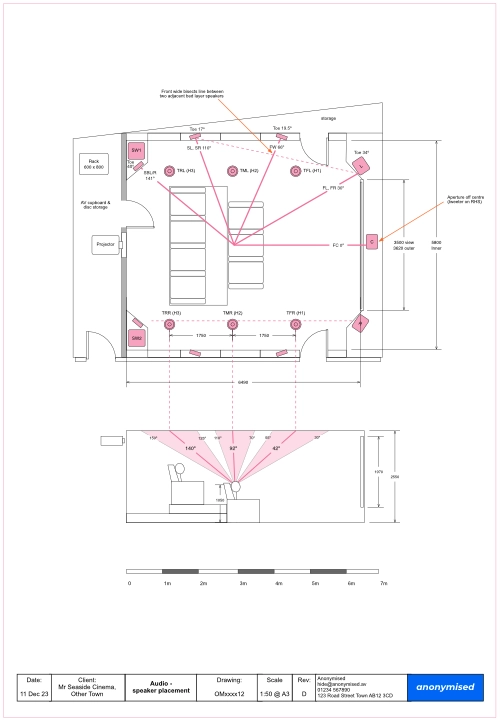
Documentation examples - sightlines, fabric drops, speaker placement
Great documentation should be part of everyone's process - for a start, you might need a paper trail if there's a drama. It's much easier to track revisions and changes, and it removes doubt, especially when working with third parties.
If your provider isn't creating really good design documents as part of their process, why not?
CEDIA even has an award category for 'best documentation' - having seen various winners, I may not get that one anytime soon.
So what does this mean for me?
Winning a CEDIA Smart Home award is kind of a big deal - grounded in evidence, design, and attention to detail.
The engineering has been verified and approved by a panel of experts; entries are anonymous and free from commercial influence or bias - and for integrator members, it's completely free of charge.
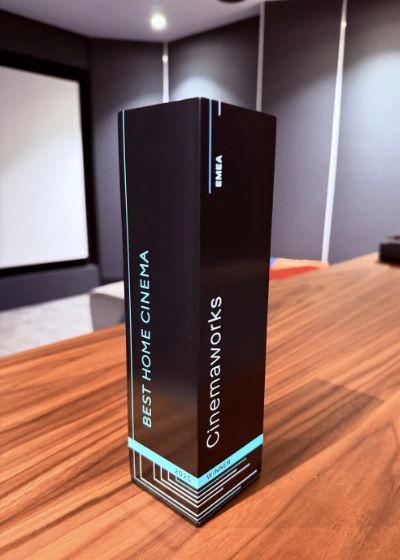
I've entered several times, judged countless amazing projects, and failed to make Finalist twice (I got better). I firmly believe that CEDIA awards are on a level with RIBA architecture awards - impartial, design- and engineering-led, and beyond reproach.
Or in other words, I don't just say I'm good at what I do, backed by pictures of pretty rooms, or flowery marketing speak.
With my second CEDIA Smart Home Award, I've proved it.
Get in touch if that sounds good to you. Your room definitely will.



WRITTEN BY
Owen Maddock
Owner & designer, Cinemaworks
I've spent twenty years looking for ways to make films feel more real in people's homes.
CEDIA® Member of Excellence, award-winning designer, podcast host, and the one you'll actually work with.